The Core Problem
Why can’t we simply like ourselves just as we are?
Why are we dissatisfied with ourselves and with life?
Eastern wisdom teachings tell us that life is a precious gift because it gives us the opportunity to realize love, awareness, and consciousness — which are our true nature.
If only there weren’t this deep belief that we are not good enough.
The roots go far back — to the story of Adam and Eve being cast out of paradise, along with the message of “original sin.”
So much for being good just as we are. Aren’t we all sinners, flawed beings, who must strive to return to paradise?
The story of faults and deficiencies runs like a thread through our lives. Through our parents, at school, at work, in relationships. And one day, we internalize it — the feeling that something is wrong with us.
Now we do everything to avoid the pain of feeling worthless or not good enough. We work hard to succeed. Outwardly.
Every time our flaws or weaknesses are exposed — to ourselves or to others — we react like Adam and Eve and try anxiously to cover our nakedness, our vulnerability.
And so perhaps the greatest tragedy of our lives arises:
freedom would be possible, yet we spend most of our lives trapped in the same unhealthy patterns.
The Way
Radical acceptance is the way out of this dilemma.
The psychiatrist Carl Rogers puts it this way:
“The curious paradox is that when I accept myself just as I am, then I can change.”
It sounds crazy, but real change does not arise through pressure , it arises through acceptance.
As long as we reject ourselves inwardly and believe “I am not good enough,” we remain stuck in exactly that state.
Only when we fully accept ourselves (with all our flaws and weaknesses) does a space of relaxation and clarity emerge. And from that state, real change becomes possible.
Maybe you know these moments too:
“This can’t go on like this. I’m too overweight, too unfit, not successful enough, too afraid in life… I need to change.”
From now on: more discipline, more control, more “becoming better.”
And what usually happens? Nothing.
We fight against something we cannot defeat. On the contrary: the more we fight, the stronger it becomes.
The Liberation
At some point, I stopped. Not practicing, but fighting.
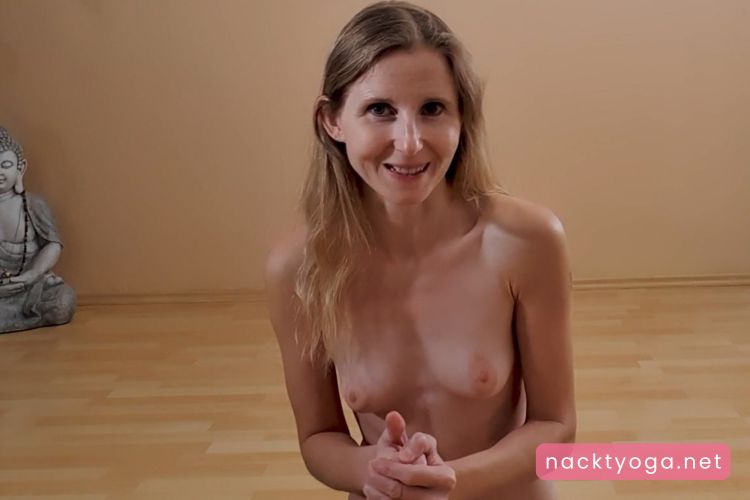
I simply stood there, naked in front of the mirror, feeling my body.
Without judgment. Without a goal. Without “this is how it should be.”
And for the first time, there was silence.
No inner critic. No pressure. No need to change. Just this moment.
My breath became deeper. My body softer. My thoughts quiet.
A deep peace without doing anything.
The Paradox
This is the paradox:
The moment you stop trying to change yourself, real change begins.
Not because you improve yourself, but because you stop rejecting yourself.
And maybe this is true freedom:
to show yourself as you are, to feel yourself as you are, without a mask, without a fight.
Weekly Practice
Let go this week of everything that is meant to make you “better.”
No goals. No expectations. No comparison.
And then feel into this:
Who are you when there is nothing left to improve?